Influence Style Indicator

The leader’s influence posture
In today’s organizations, the ability to mobilize, persuade and gain commitment is a key driver of performance. The Influence Style Indicator™ provides insight into how individuals exercise their influence in their day-to-day professional interactions.
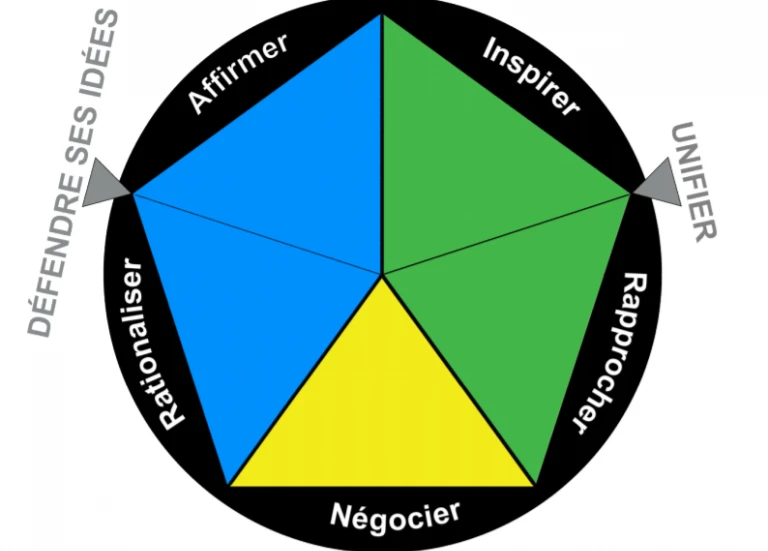
The tool explores five influence styles, Rationalizing, Asserting, Negotiating, Inspiring and Connecting, and highlights their relative use in communication and professional relationships (dominant, preferred, secondary or underutilized styles). It offers a clear view of an individual’s influence posture, its strengths and its areas for balance.
Used within a development context, the Influence Style Indicator™ helps individuals refine their relational impact, broaden their influence repertoire and adapt their communication to different situations and stakeholders.
The assessment can be used in individual coaching or in a team setting to develop a shared understanding of influence styles and improve the quality of interactions within teams.
Who is it for?
- Executives and managers stepping into a new role (credibility and leadership presence)
- Leaders driving transformation, change or reorganization programs
- Leaders operating in international or highly intercultural environments
- Managers facing complex negotiation or arbitration challenges
- High-potential talents engaged in leadership growth and development
What is it for?
- Discover the five influence styles (Rationalizing, Asserting, Negotiating, Inspiring, Connecting)
- Better understand one’s natural influence style and its managerial impact
- Recognize and adapt to the dominant styles of others
- Strengthen the ability to align, mobilize and gain commitment
- Support engagement and team effectiveness
Practical framework
- A confidential and easy-to-complete online questionnaire
- A detailed individual (or team) report on influence styles and their balance
- Identification of key strengths and development opportunities
- Insight into style gaps and their impact on communication and collaboration
The feedback session
The feedback session provides an in-depth analysis of influence preferences, their alignment with role expectations, and their practical implications in high-stakes professional situations.
In an individual coaching context, the process may be extended through a development plan designed to expand the client’s influence repertoire and adjust their leadership posture over time.
In a team setting, the assessment allows for the comparison of profiles, highlighting the diversity of styles, areas of complementarity, and potential zones of tension or misunderstanding.